

April 30, 2026
Wife of Man Who Died in Wayne County Correctional Facility Sues Warden, County and Medical Staffing Company
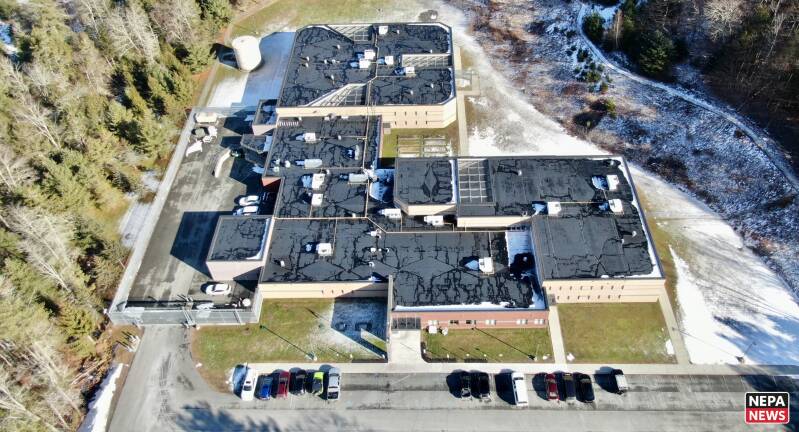
HONESDALE, Pa. — Frank Oliveras entered the Wayne County Correctional Facility as a pretrial detainee on Oct. 26, 2024. He was 65, was never convicted of a crime and had a medical history that included multiple sclerosis, COPD, coronary artery disease, pulmonary fibrosis, diabetes, hypertension and two prior heart attacks.
He died inside the prison 97 days later - and now his wife, Christine A. Oliveras has filed a federal lawsuit against multiple parties.
A worker at the jail who knew Oliveras but who did not want to be identified told NEPA News in an exclusive interview:
“He (Oliveras) should have never been there. He should have been held for 72 hours and let out. Um, he doesn't have any type of history of any criminal background. Not even a parking ticket. The guy has medical conditions. He should have been let out.”
The lawsuit filed in late February 2026 alleges that her husband’s multiple medical emergencies were ignored, that he was refused hospital transfers and experienced care so inadequate that it amounted to deliberate indifference.
The case is before Hon. Karoline Mehalchick, a United States District Judge for the Middle District of Pennsylvania.
Two of the defendants, a medical staffing company and one of the nurses named in the suit, have fired back, denying every substantive allegation and asserting they provided appropriate care at all times.
The suit is pending in the U.S. District Court for the Middle District of Pennsylvania. It names eight defendants: Wayne County, Warden Randal W. Williams, medical contractor SHC Services Inc. (doing business as Supplemental Health Care), contracted physician Dr. Philip Gutherz, nurse practitioner Lisa Miller, registered nurses Caroline Shifler and Kimberly Blasi, and licensed practical nurse Terri Bianchi.
Unnamed corrections officers and medical providers are also named as John and Jane Does and Jack and Jill Roes. The complaint brings 11 counts — Section 1983 violations, medical negligence, deliberate indifference, unconstitutional conditions of confinement, wrongful death and survival — and demands a jury trial.
The suit alleges that because Oliveras was held as a pretrial detainee, his rights were anchored in the Due Process Clause of the Fourteenth Amendment. This constitutional provision mandates the right to receive adequate medical treatment and ensures that individuals are held under humane conditions of confinement.
SHC and Blasi, through attorney Paul G. Lees of Dickie, McCamey & Chilcote, filed an answer March 11, 2026, denying all liability. They maintained they “at all times relevant hereto provided appropriate care in accordance with the standards of care.”
Wayne County and Williams are separately represented by Gerard J. Geiger of Newman Williams in Stroudsburg.
What the complaint alleges
According to the complaint, Oliveras arrived at WCCF with a documented medical history that included:
- Multiple sclerosis
- Chronic obstructive pulmonary disease (COPD)
- Coronary artery disease
- Pulmonary fibrosis
- Hyperlipidemia
- Type II diabetes
- Hypertension
- Chronic lumbar and cervical spine pain
- Spinal stenosis
- Two previous heart attacks with cardiac stent placement
On or about January 16, 2025, a mobile chest X-ray at the facility revealed that Oliveras had acute lingular pneumonia — a diagnosis the complaint describes as requiring hospital-level care given Oliveras’s risk profile. But Oliveras was not taken to a hospital.
Instead, Miller ordered nebulized albuterol twice daily and antibiotics, a treatment the complaint calls wholly insufficient. That same day, Oliveras reportedly told Bianchi he had suffered a seizure while his oxygen was allegedly dropping and he was experiencing low blood pressure.
Three days later, on January 19, Shifler found him short of breath and wheezing at about 6 a.m., his oxygen saturation at 94% — borderline hypoxic, according to the complaint. At about 9:35 a.m., he fell from his bed, raising what Shifler documented as a goose-egg-sized lump on his forehead and a bruise on his right cheek. His blood pressure had allegedly risen to 130/74, stage 1 hypertensive and a red flag in a pneumonia patient with his cardiac history.
When Shifler contacted Miller, the reported response was to continue monitoring. By about 11 a.m., Oliveras told Shifler he could not breathe and his oxygen had reportedly fallen to 80%. The complaint asserts the standard of care mandated immediate hospital transfer.
The only oxygen available at the facility was three liters per minute via nasal cannula — which is completely inadequate for a patient in respiratory failure, according to the complaint. It is alleged that Miller was contacted a second time and told Shifler to keep monitoring the Oliveras but no transfer to the hospital was ordered.
On Jan. 27, Oliveras was moved to WCCF’s medical housing unit with orders for checks every 15 minutes. The complaint alleges that an inmate was assigned to supervise him because of chronic understaffing — and that the required checks never happened, though facility records allegedly claimed they did.
A former inmate confirmed to NEPA News that only one other inmate monitored Oliveras’s condition.
The suit alleges that, by January 30, Oliveras complained of chest tightness. Blasi administered albuterol and checked his oxygen, which read within normal limits. The complaint contends that post-nebulizer readings are misleading because they reflect temporarily improved airflow that fades within an hour. His blood pressure, 110/60, is characterized in the complaint as a warning sign of early sepsis. The complaint asserts that Blasi did not reassess or escalate the medical situation.
At about 1:55 p.m. on January 31, Shifler and Blasi were called to Oliveras’s housing unit because he was reportedly “not acting right.” They found him on his bed, against the wall, unresponsive. Resuscitation efforts by staff and paramedics failed and Oliveras died in the facility.
“The inmates were the ones taking care of him,” said the source who spoke to NEPA News. “And the warden came in and he's like, "All right, all right, just lock in, lock in. I promise I will take him to the hospital. Like, we're gonna take him right now. They didn't.”
The worker added that the Wayne County Jail is built like a state or federal prison, instead of like most County jails. “The doors are slate doors with just a square hole. And that's where they put anybody that is on suicide watch or medical monitoring. They put them in their jail cell and then the inmates have to watch them through these holes.”
On the day of Oliveras’ death, an inmate who was on monitor duty heard Oliveras collapse and went to check the hole and was screaming at him but he wasn't responding.
“He was pressing the emergency button, and then he was banging on the door,” one source told NEPA News. And they kept just telling him, "You gotta hold on, you gotta wait a minute, you gotta hold on."
Medical help didn’t arrive until some eight minutes later, the source said.
The Wayne County Medical Examiner determined the cause of death was heart failure secondary to pneumonia.
The defense
In their March 11 answer, SHC and Blasi denied every factual allegation tied to medical care, repeatedly asserting the medical record “speaks for itself.” They acknowledged Oliveras had pre-existing conditions and suggested those conditions “may have caused and/or contributed to his death” without specifying which.
SHC asserted its staff, “including but not limited to Defendant Nurse Blasi, were competent and at all times relevant hereto provided appropriate care in accordance with the standards of care.” The company characterized itself as a Delaware corporation operating under a staffing services agreement with WCCF — language that may signal a strategy to distance SHC from direct clinical responsibility.
Among 14 affirmative defenses: qualified immunity, contributory negligence by Oliveras, and the assertion that his death was caused by “persons or entities other than Responding Defendants.”
The complaint alleges prolonged exposure to contaminated air was a significant contributing factor to Oliveras’s pneumonia. SHC and Blasi said they had insufficient information to address the mold claims.
The cell mate
One of his former cellmates, who spoke to NEPA News on condition of anonymity, corroborated the fall and related injuries.
The former cellmate said that the entire time he was Oliveras’ cellmate, that he would come down for meals “but then sleep most of the rest of the time. He added that the correction officers knew about some of his falls and did not get him evaluated. “And when he had pneumonia, they put him in medical isolation and left him there,” the former inmate source said.
When Oliveras died, the former inmate told NEPA News that the correction officers “locked everything down” by taking away all electronic tablets because they did not want it known outside that Oliveras died in the jail
The bigger picture
The complaint lays out what it described as systemic failures. WCCF was allegedly understaffed in both medical and correctional personnel. Gutherz’s contract allegedly required only two visits per week, which could reportedly be fulfilled by his physician’s assistant.
The county also had no policy for handling emergency medical situations involving inmates with cardiac and pulmonary disease, according to the suit. Oliveras’s family states that it called the jail repeatedly asking that he be hospitalized and fellow inmates petitioned for the same. But both requests were refused, according to the suit.
The mold
The complaint also contends WCCF was infested with mold — visible in housing areas, walls, ceilings and ventilation systems — and that the county had known for years.
A former cellmate of Oliveras confirmed to NEPA News that much of the facility was full of mold.
Oliveras is survived by his wife and three daughters, including one who is disabled. Frank Oliveras was her primary caretaker.
Plaintiff’s counsel is Dylan T. Hastings of Strokovsky LLC in Philadelphia.
Counsel for the remaining defendants could not immediately be identified from the court docket.
Oliveras v. Wayne County, et al., No. 3:26-cv-00196-KM, U.S. District Court for the Middle District of Pennsylvania.